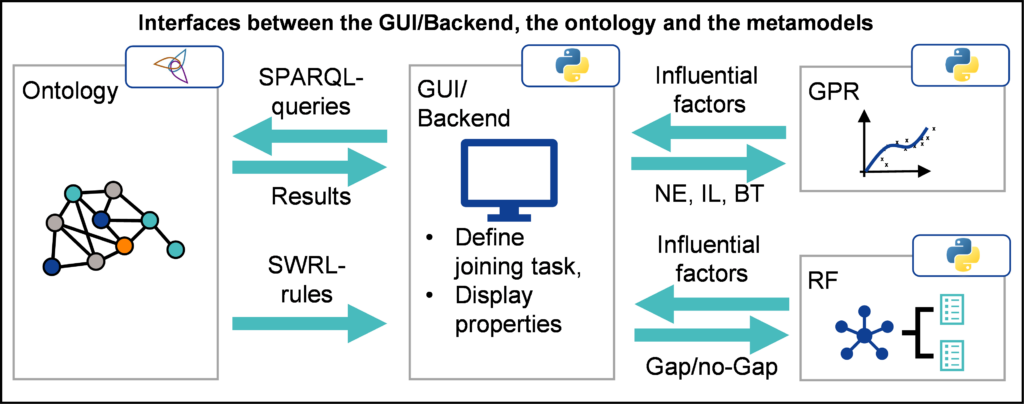
Designing clinch joints is typically complex and iterative. A recent publication introduces a hybrid approach that combines knowledge-based methods with data-driven models. Generalizable relationships are represented as design rules within an ontology, while more complex effects are predicted using machine learning. Within an integrated workflow, existing joints can be analyzed, parameters systematically adapted, and resulting joint properties predicted. The approach reduces trial-and-error, improves transparency, and offers strong potential for more efficient clinch joint design.
https://link.springer.com/article/10.1007/s44245-026-00230-x
Knowledge and Data Based Approach for Efficient Clinch Joint Design