Introduction to patent law and related property rights (PaRe)
The lecture held by patent attorney Dr. S. Mooser in the scope of 2 weekly lecture hours is aimed at students and research assistants. It provides general information on the possibilities of obtaining protection for intellectual property and refers to patent law, which is important for technical inventions.
This course is only offered in the summer semester.
Basics of product development (GPE)
The aim of the lecture (4 weekly lecture hours) with a further exercise (2 weekly lecture hours) is to give students of BPT, IP, ME, MT, MWT and WING an understanding of the basic as well as more complex machine elements. Function, design, calculation and standardization are dealt with.
This course is only offered in the summer semester.
Fundamentals of system modelling with SysML (GdSM)
The aim of the lecture with accompanying exercises (3 SWS) is to give students an insight into the modelling of technical systems using the System Modelling Language (SysML) and to create a methodologically sound foundation for future engineering activities in the field of modern system development. The theoretical content is deepened in the exercises using practical examples.
No planned appointments for this parallel group yet.
Integrated product development (IPE)
The aim of this lecture with a further exercise in the scope of 4 weekly lecture hours is the training of future development managers. The students are taught competencies in order to use organizational and technical methods and tools as holistically thinking product developers in a goal-oriented manner.
This course is only offered in the winter semester.
Design Exercise I (KÜ I)
The aim of this course (4 weekly lecture hours) for students of BPT, IP, MB and WING is to gain a basic understanding of the methodical design of machines. The contents are conveyed by means of a design task from mechanical engineering, which is worked on in small groups.
This course is only offered in the winter semester.
Design Exercise II (KÜ II)
The course serves as a practical supplement to Machine Elements II in the scope of 2 weekly lecture hours (practical course). The knowledge acquired, especially in the areas of gear design and calculation, is applied and deepened in the form of manual drawings and accompanying calculations.
This course is only offered in the summer semester.
Design project course (KoPra)
The project course in the scope of 6 weekly lecture hours provides an insight into the development and design of complex technical systems based on a central problem from the industrial environment. It serves the interdisciplinary application of previous study contents as well as the teaching of important methodical and social competences, for example with regard to project management and teamwork.
This course is only offered in the winter semester.
Concept development of innovative products (KIP)
The aim of this 2 weekly lecture hour course is to train future development engineers for early product development phases. The students apply methods and tools already learned in a team to develop concepts for solving a key problem.
Nach der Einteilung der Gruppen und der Erläuterung der Problemstellung in der Kick-off Veranstaltung wird im Rahmen dieser Veranstaltung eine komplexe Aufgabenstellung ganzheitlich in Fünferteams - im Wettbewerb zu anderen Gruppen - bearbeitet. Die gestellte Aufgabe bietet die Möglichkeit, die in den Lehrveranstaltungen TPG, MRK und IPE erlernten Methoden z. B. zur Entwicklung und Gestaltung von technischen Produkten bzw. Systemen von der Idee bis zum Konzept (in frühen Phasen des Produktentwicklungsprozesses) eigenverantwortlich anzuwenden. Damit soll nicht nur ein Verständnis für die Komplexität solcher Aufgaben aus dem industriellen Alltag erlangt sondern auch eine umfangreiche Übertragung der erlernten Methoden aus TPG, MRK und IPE in den frühen Phasen der Produktentwicklung umgesetzt werden. Dabei wird einerseits großer Wert auf eine gute Selbstorganisation und ein effizientes Projektmanagement gelegt und andererseits werden auch die bereits erlernten Fähigkeiten in der Praxis geschult (z. B. DfX-gerechtes Konstruieren, Rechnereinsatz in der Konstruktion, Wirtschaftlichkeitsbetrachtungen, Trendforschung, Entscheidungsfindung). Während der Abschlussveranstaltung stellen die einzelnen Teams ihre entwickelten Konzepte mit Hilfe eines Handouts/Flyers und einer Präsentation vor. Anschließend werden die vorgestellten Vorgehensweise und Konzepte diskutiert.
The course of 4 weekly hours of lectures and 2 weekly hours of exercises is aimed at students of mechanical engineering and teaches the function, design, calculation and standardization of basic machine elements – the basic building blocks of all machines – at a university level.
This course is only offered in the winter semester.
This course is only offered in the winter semester.
This course is only offered in the winter semester.
Machine elements II (ME II)
Based on Machine Elements I, this course covers the function, design, calculation and standardization of complex machine elements, such as rolling bearings, gear drives or couplings, in 4 weekly hours of lecture and
2 weekly hours of exercises.
This course is only offered in the summer semester.
This course is only offered in the summer semester.
This course is only offered in the summer semester.
Methodical and computer-aided design (MRK)
The aim of the lecture (3 weekly lecture hours + 1 weekly lecture hour of exercise) is to impart the basics of methodical and computer-aided design to advanced Master’s students. In addition to recognized theories and procedural models of methodical product development, modern means of computer support are dealt with and deepened in a corresponding exercise.
This course is only offered in the winter semester.
This course is only offered in the winter semester.
Practical product development with 3D CAD systems (PPE-3D-CAD)
The aim of the lecture with exercise (2 weekly lecture hours) is to give students an understanding of the function, structure and advanced operation of 3D-CAD systems used in practice. In addition, their integrated CAx add-on modules are treated as central synthesis tools in the computer-aided product development process.
Within the scope of the course (2 weekly lecture hours), the students are taught knowledge about computer-assisted product development. Theory and use of the computer-based tools are also essential teaching contents of the practical course. The five experiments provide a basic knowledge of the computer-aided tools used.
This course is only offered in the summer semester.
Robust Design and Tolerancing (RDTol)
The course (2 weekly lecture hours) conveys important ideas and basics of robust design and tolerancing. Beside this, the students get to know advanced methods and techniques, such as robustness analysis, tolerance analysis and tolerance-cost-optimization, as well as their application using state-of-the-art software tools.
Der zunehmende Qualitäts-, Zeit- und Kostendruck erfordert von Unternehmen die Entwicklung robuster Produkte, die den Markt- und Kundenanforderungen gerecht werden. Robuste Produkte sind in diesem Zusammenhang dadurch gekennzeichnet, dass sie insensitiv gegenüber verschiedenen Störgrößen sind und ihre Funktion auch unter Schwankungen der Umgebungsbedingungen zuverlässig erfüllen. Motiviert hierdurch werden im Rahmen der Vorlesung wesentliche Ideen und Grundlagen des Robust Design und des Toleranzmanagements erläutert. Daneben lernen die Studierenden weitergehende Verfahren und Techniken, wie die Robustheitsbewertung, die Toleranzanalyse und die Toleranzoptimierung sowie deren Durchführung mit aktuellen Softwaretools kennen. Nach erfolgreichem Abschluss der Lehrveranstaltung haben die Studierenden wesentliche Kompetenzen erworben, die sie auf eine Tätigkeit im Bereich des Robust Design und Toleranzmanagements in der Praxis und Wissenschaft vorbereiten.
The course of 4 weekly lecture hours (practical course
with introductory lecture) imparts basic knowledge and skills in creating and reading technical drawings, the central communication platform in mechanical engineering.
The course in the scope of a 2 weekly lecture hour internship imparts basic knowledge and skills in the modeling of components and assemblies in the 3D CAD system, the central computer tool in mechanical engineering.
This lecture with a further exercise (4 weekly lecture hours) focuses on future design engineers. The design of technical systems under consideration of different Design for X aspects will be discussed.
Subject of the seminar, in the scope of 2 weekly lecture hours, are questions of the commercialization of technology-oriented business ideas and their application-oriented implementation via business start-ups. Under the guidance of competent experts, students develop viable business concepts for their (own) technical business idea.
Gegenstand sind Fragestellungen der Kommerzialisierung von technologieorientierten Geschäftsideen und deren anwendungsorientierte Umsetzung über Unternehmensgründungen. In Absprache mit den Dozenten und unter Anleitung fachkundiger Experten entwickeln Studierende gemeinsam mit Doktoranden und Postdocs tragfähige Geschäftskonzepte für eine (eigene) technische Geschäftsidee und holen ein erstes Kundenfeedback zu dieser ein.
In Arbeitsgruppen bearbeiten die Seminarteilnehmer/innen wichtige gründungsrelevante Fragestellungen. Die einzelnen Präsenztermine setzen sich aus Theorie- und Praxisphasen zusammen. Insbesondere werden folgende Themen besprochen: Identifikation und Schärfung von Problemstellungen sowie möglichen Lösungen, Einholen von Kundenfeedback, Weiterentwicklung des Geschäftsmodells (Canvas), Prototyping und Business-Pitch. Die Informationen zu den unterschiedlichen Themenschwerpunkten werden eigenständig anhand geeigneter Dokumenten-/ Internet-recherche und empirischer Erhebungen gesammelt, bewertet und interpretiert. Der Aufbau des Technologie-Startup Seminars bedingt, dass die Studierenden fachliche Entwicklungen anderer Kommilitonen anleiten und vorausschauend mit Problemen im Team umgehen, Ziele für eigene Lern- und Arbeitsprozesse definieren, reflektieren und bewerten sowie wertschätzendes Feedback geben. Durch eine abschließende Präsentation und die Bewertung durch eine Fachjury erhalten die Studierenden externes Feedback zu ihrem Projekt und schulen ihre Kommunikations- und Präsentationsfähigkeiten.
No planned appointments for this parallel group yet.
Tribology and surface technology (TO)
In the course of the lecture (2 weekly lecture hours) students are taught basic practical knowledge in the fields of tribology and surface technology. Next to the lecture, a voluntary practical course (2 weekly lecture hours) can be completed.
This course is only offered in the summer semester.
Rolling bearing technology (WLT)
The course (4 weekly lecture hours) focuses on future development specialists in the field of rolling bearing technology. In-depth knowledge of the design and design of rolling bearings is imparted and the interaction of various engineering disciplines is demonstrated using rolling bearings as an example.
Das Maschinenelement Wälzlager stellt eine Basiserfindung dar, ohne die moderner Maschinen- und Fahrzeugbau undenkbar wären. Die überragende Bedeutung des Wälzlagers für die Mechanik ist vergleichbar mit der des Transistors für die Elektronik. Obgleich der grundsätzliche Aufbau moderner Wälzlager seit langem bekannt ist, so ist das komplexe System Wälzlager bis heute dennoch nicht vollständig theoretisch durchdrungen. Für ein besseres Verständnis und die zielgerichtete Optimierung von Wälzlagern ist ein Zusammenwirken unterschiedlichster Fachdisziplinen notwendig. Die Lehrveranstaltung Wälzlagertechnik" ist zu verstehen als eine sinnvolle Fortsetzung der Grundlagenlehrveranstaltungen Maschinenelemente II" bzw. Grundlagen der Produktentwicklung", aus denen das Wälzlager als ein wichtiges Maschinenelement herausgegriffen und einer vertieften Betrachtung unterzogen wird. Im Fokus dieser Lehrveranstaltung stehen insbesondere interessierte Studentinnen und Studenten der Studiengänge Maschinenbau, Mechatronik, Werkstofftechnik, Wirtschaftsingenieurwesen und International Production Engineering, die sich nach ihrem Studium eine berufliche Tätigkeit im Bereich der Wälzlagertechnik sei es in der universitären Forschung, bei einem Wälzlagerhersteller oder in den Entwicklungsabteilungen von Wälzlageranwendern vorstellen können.
Im Einzelnen werden in der Lehrveranstaltung behandelt: Allgemeine Grundlagen, Wälzlagerwerkstoffe und Wärmebehandlung, Wälzkontakt, Belastung und Lastverteilung im Wälzlager, Tragfähigkeit und Lebensdauer von Wälzlagern, Kinematik des Wälzlagers, Reibung im Wälzlager, Schmierung von Wälzlagern, konstruktive Gestaltung von Wälzlagerungen, Toleranzen und Lagersteifigkeit, Fertigung, Montage und Handhabung, Schadenskunde, neuere Entwicklungen in der Wälzlagertechnik.


 The lecture held by patent attorney Dr. S. Mooser in the scope of 2 weekly lecture hours is aimed at students and research assistants. It provides general information on the possibilities of obtaining protection for intellectual property and refers to patent law, which is important for technical inventions.
 The aim of the lecture (4 weekly lecture hours) with a further exercise (2 weekly lecture hours) is to give students of BPT, IP, ME, MT, MWT and WING an understanding of the basic as well as more complex machine elements. Function, design, calculation and standardization are dealt with.
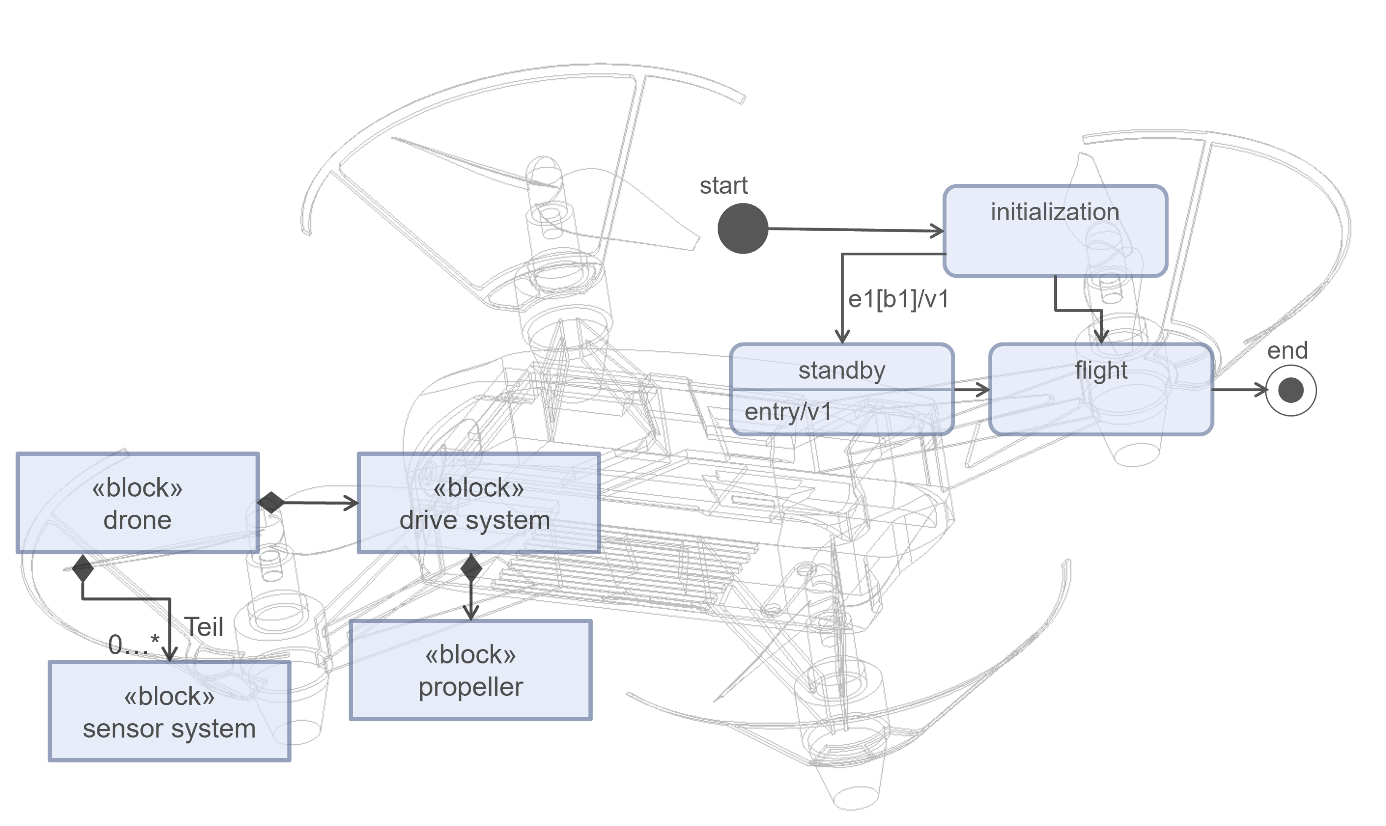 The aim of the lecture with accompanying exercises (3 SWS) is to give students an insight into the modelling of technical systems using the System Modelling Language (SysML) and to create a methodologically sound foundation for future engineering activities in the field of modern system development. The theoretical content is deepened in the exercises using practical examples.
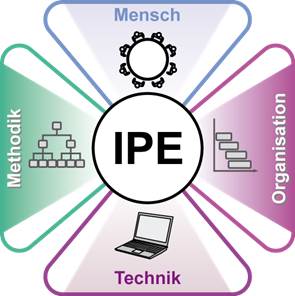 The aim of this lecture with a further exercise in the scope of 4 weekly lecture hours is the training of future development managers. The students are taught competencies in order to use organizational and technical methods and tools as holistically thinking product developers in a goal-oriented manner.
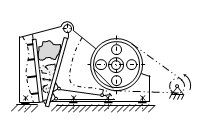 The aim of this course (4 weekly lecture hours) for students of BPT, IP, MB and WING is to gain a basic understanding of the methodical design of machines. The contents are conveyed by means of a design task from mechanical engineering, which is worked on in small groups.
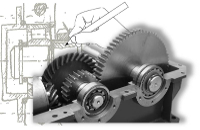 The course serves as a practical supplement to Machine Elements II in the scope of 2 weekly lecture hours (practical course). The knowledge acquired, especially in the areas of gear design and calculation, is applied and deepened in the form of manual drawings and accompanying calculations.
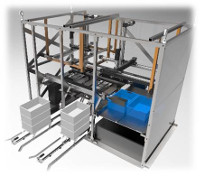 The project course in the scope of 6 weekly lecture hours provides an insight into the development and design of complex technical systems based on a central problem from the industrial environment. It serves the interdisciplinary application of previous study contents as well as the teaching of important methodical and social competences, for example with regard to project management and teamwork.
 The aim of this 2 weekly lecture hour course is to train future development engineers for early product development phases. The students apply methods and tools already learned in a team to develop concepts for solving a key problem.
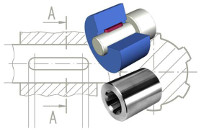 The course of 4 weekly hours of lectures and 2 weekly hours of exercises is aimed at students of mechanical engineering and teaches the function, design, calculation and standardization of basic machine elements – the basic building blocks of all machines – at a university level.
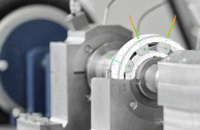 Based on Machine Elements I, this course covers the function, design, calculation and standardization of complex machine elements, such as rolling bearings, gear drives or couplings, in 4 weekly hours of lecture and
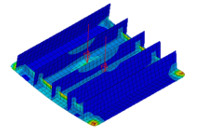 The aim of the lecture (3 weekly lecture hours + 1 weekly lecture hour of exercise) is to impart the basics of methodical and computer-aided design to advanced Master’s students. In addition to recognized theories and procedural models of methodical product development, modern means of computer support are dealt with and deepened in a corresponding exercise.
 The aim of the lecture with exercise (2 weekly lecture hours) is to give students an understanding of the function, structure and advanced operation of 3D-CAD systems used in practice. In addition, their integrated CAx add-on modules are treated as central synthesis tools in the computer-aided product development process.
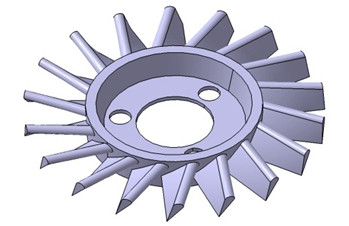 Within the scope of the course (2 weekly lecture hours), the students are taught knowledge about computer-assisted product development. Theory and use of the computer-based tools are also essential teaching contents of the practical course. The five experiments provide a basic knowledge of the computer-aided tools used.
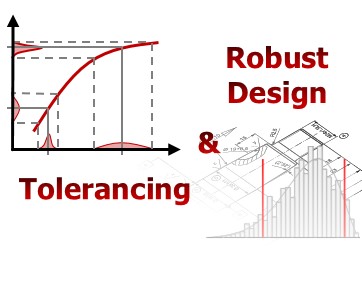 The course (2 weekly lecture hours) conveys important ideas and basics of robust design and tolerancing. Beside this, the students get to know advanced methods and techniques, such as robustness analysis, tolerance analysis and tolerance-cost-optimization, as well as their application using state-of-the-art software tools.
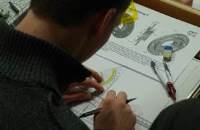 The course of 4 weekly lecture hours (practical course
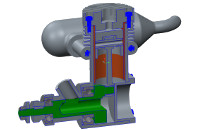 The course in the scope of a 2 weekly lecture hour internship imparts basic knowledge and skills in the modeling of components and assemblies in the 3D CAD system, the central computer tool in mechanical engineering.
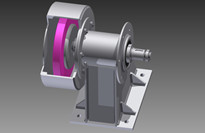 This lecture with a further exercise (4 weekly lecture hours) focuses on future design engineers. The design of technical systems under consideration of different Design for X aspects will be discussed.
 Subject of the seminar, in the scope of 2 weekly lecture hours, are questions of the commercialization of technology-oriented business ideas and their application-oriented implementation via business start-ups. Under the guidance of competent experts, students develop viable business concepts for their (own) technical business idea.
 In the course of the lecture (2 weekly lecture hours) students are taught basic practical knowledge in the fields of tribology and surface technology. Next to the lecture, a voluntary practical course (2 weekly lecture hours) can be completed.
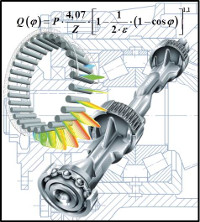 The course (4 weekly lecture hours) focuses on future development specialists in the field of rolling bearing technology. In-depth knowledge of the design and design of rolling bearings is imparted and the interaction of various engineering disciplines is demonstrated using rolling bearings as an example.